Letters to the Editor
From Helge and Tove Kristensen
August 2020
Dear John and all our good friends in 44 squadron,
It is quite a while ago since I promised to mail some details about the Lancaster that was shot down over Denmark 30th August, 1944. Now I try hard, doing my very best and of course hoping that you will forgive me for not explaining myself too well in your language.
Mr. Kristian Boje Pedersen wrote an article about the episode in a small local paper in 2004, which I found in archives in Vivild. Kristian was son of Sigvald Boje Pedersen who at the time owned a quite big farm at Estruplundvej 56, a place close to the eastern part of Randers Fiord. Both Kristian and his father passed away a number of years ago. Here is the most important/interesting part of his report:
During the mentioned night there was a lot of activities in the air, allied bombers with their loads of “gifts” to parts of Germany. One of the Lancasters had been hit by antiaircraft at the west coast, probably not far from Holstebro, but the damage was limited and it was able to e flight. But a number of German night fighters had tracked the Lancaster in the area above Randers Fiord and a heavy fight started. Heavily damaged and unable to continue mission, crew decided to drop the bombs as their situation was hopeless. In low level they followed the fiord toward Kattegat, where they dropped several bombs. The bomber circulated and as it again was close land, one of the crew members tried to leave the plane by parachute, but he did not succeed. His body was found later on at the coast of Læsø. The Lancaster changed course again and hopeless surrounded in flames it crashed (nosedived) in a great explosion on the meadow area belonging to Sigvald Boje Pedersen.
It was after the crash, revealed that the crew has not succeeded in getting rid of all the bombs. Some cows and horses was wounded, shocked and very confused. Sigvald and his son Kristian (six years) and many others were witnesses and they all felt sorry for the brave English aircrew.
In the following early morning local residents tried to get near the wreck but a number of heavy armed German troops would not let any of them come near. The bodies, or rather the pieces of six British airmen, were made ready to be put in a tomb which the troops had dug in the edge close to the wreck. The witnesses protested against their procedure, but the troops continued and told the residents to shut up and leave the field.
Then the local clergyman and the schoolteacher came along and they explained to the officer in command, that this contemptible behaviour could not be accepted in Denmark. Reluctantly they accepted that the local residents took care of the body parts and after few days they succeeded respectfully in putting the British airmen in coffins, and the funeral ceremony took place on Estruplund Cemetery. The Germans has decided to forbid funeral oration and singing at the ceremony as that would be considered as an anti-German act. But it was ignored.
Residents organised a collection that resulted in the very attractive burial place. They will never be forgotten.
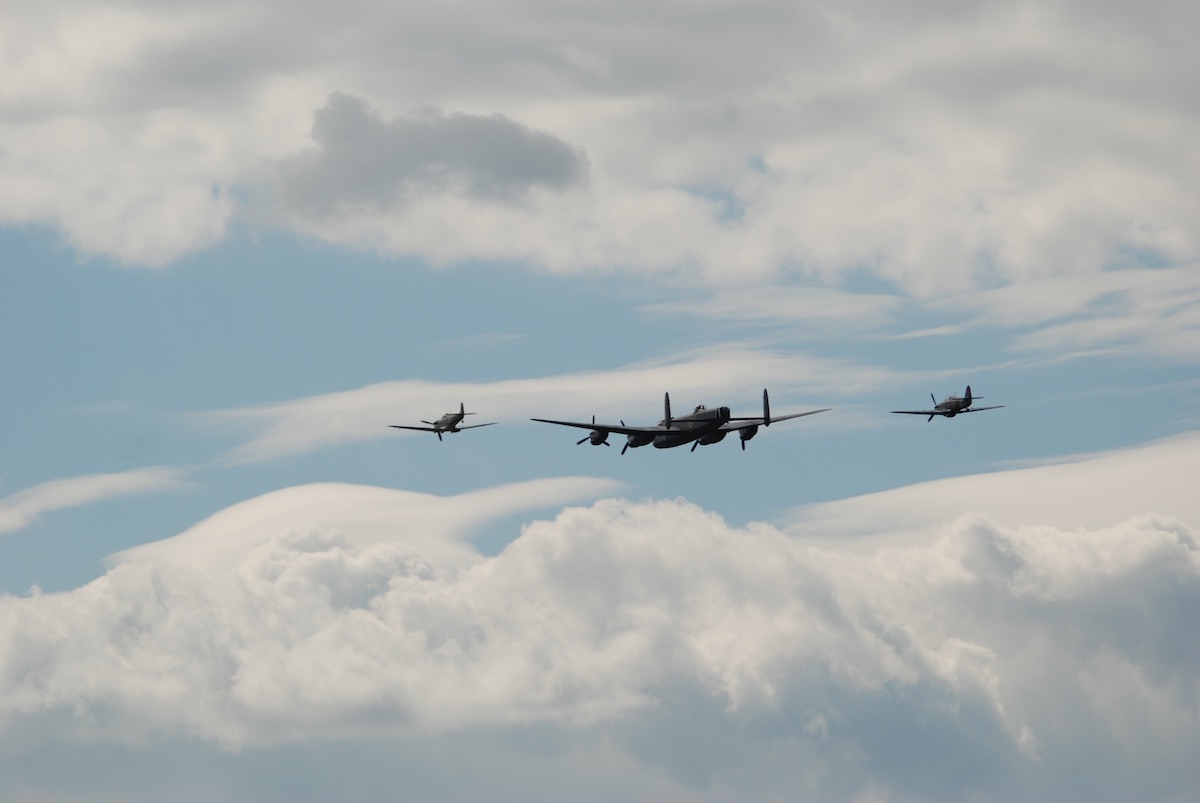
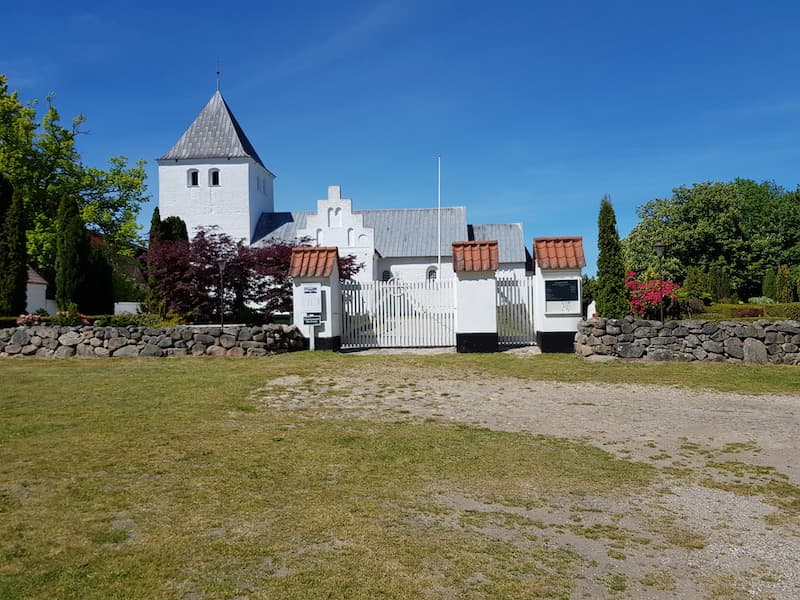
Estruplund Church
I hope that I have been able to explain myself so it is possible to understand. I have done my very best. I also enclose a map of this part of Denmark where it ended so sadly for our British friends, and also, supplied with few photos.
We are having a rather hot summer these days, maybe it is just the same at your place?
We send our best wishes and love to you all.
Tove and Helge
From Peer Petersen
Dear John,
First of all I hope that you are well?
17th September I was invited by the Australian Ambassador in Denmark to be part in a ceremony in Copenhagen where there was an inauguration of an Australian war memorial.
Order of Service was as follows: welcome address by Lt Col Gerry McGowan from the Australian Defence Force; an address by Lt Gen Kenneth Pedersen. Chief of Danish Defence Staff; an address by H E Mary Ellen Miller, the Australian Ambassador to Denmark; the unveiling of The Australian War Memorial; wreath laying ceremony (I was laying a wreath on behalf of the Commonwealth War Graves Commission); Ode of Remembrance; Last Post; One minute silence; closing remarks by Lt Col Gerry McGowan.
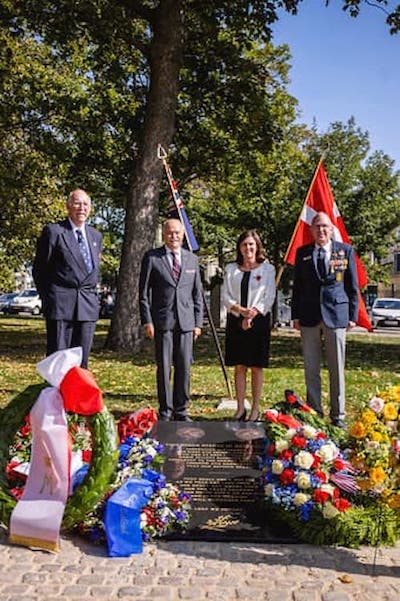
Peer Petersen (2nd from left) with the Australian Ambassador, Bob Cobley and the President of the Defence Brotherhood of Frederica, Denmark.
After the ceremony I was invited to a very special reception where also our Crown Princess Mary was. I had a chance to talk to her and tell her about my work for Commonwealth War Graves Commission. She know about it because she was informed before the ceremony by the Embassy about my work and the little book I wrote about the crash of Stirling LK279.
One of photos I have enclosed is showing the Ambassador H E MaryEllen Miller, Bob Cobley (also member of The Commonwealth War Graves Commission in Denmark), myself and president for the Defence Brotherhood in Frederica.
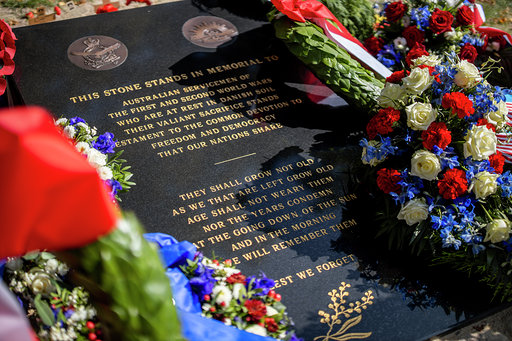
Maybe the above can be used in the next Association Newsletter?
Best wishes
Peer Petersen
From Ian Smith
Ian Smith kindly sent this photograph of his father, Thomas Harry Smith, a 44 Squadron armourer, posing with air and ground crews in front of Lancaster KM-E.
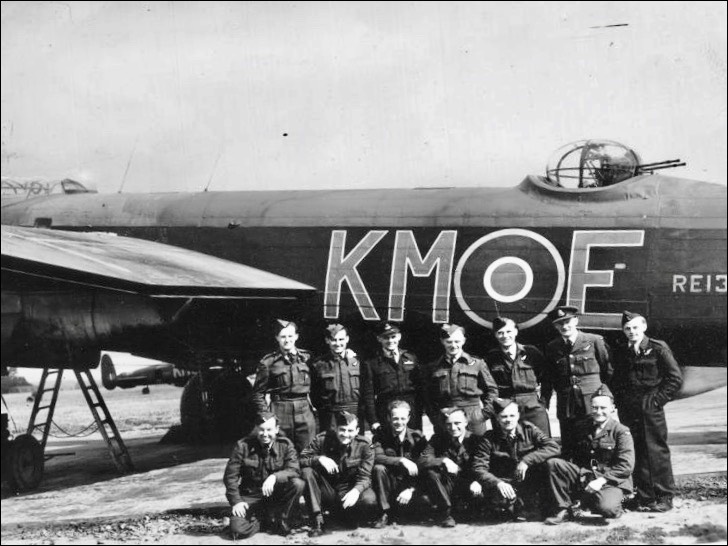
Thomas Smith (extreme left of the front row) with air and ground crews of Lancaster KM-E.