John Hargreaves’s War
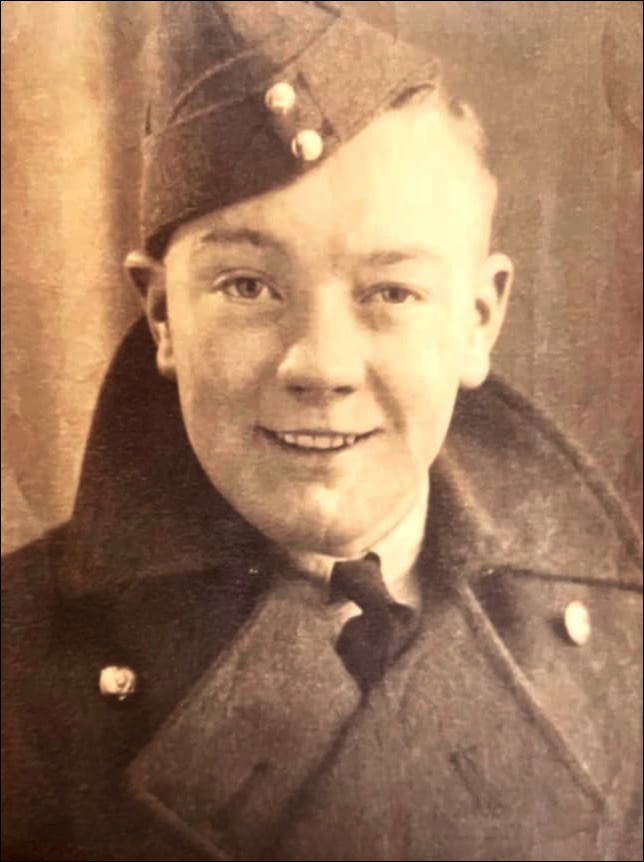
John William Hargreaves was born on the 11th of January 1921. During the Second World War he served continuously with the RAF from 22nd May 1939 until 26 September 1945, initially as an air gunner on Defiant aircraft and later as a Flight Engineer on Lancasters of 44 (Rhodesia) Squadron. On the 23rd of September 1942 John and his crew were tasked with an operational bombing mission, from which they failed to return.
On crossing the west coast of Denmark en route to the target, flak guns from IV Zug 2.Lei 742 opened fire and hit a fuel tank in the aircraft’s port wing, starting a serious fire. The aircraft was flying too low for the crew to parachute safely, so the load of incendiary bombs was jettisoned and the pilot carried out a wheels-up landing in a field near Madum at 0140 hrs.
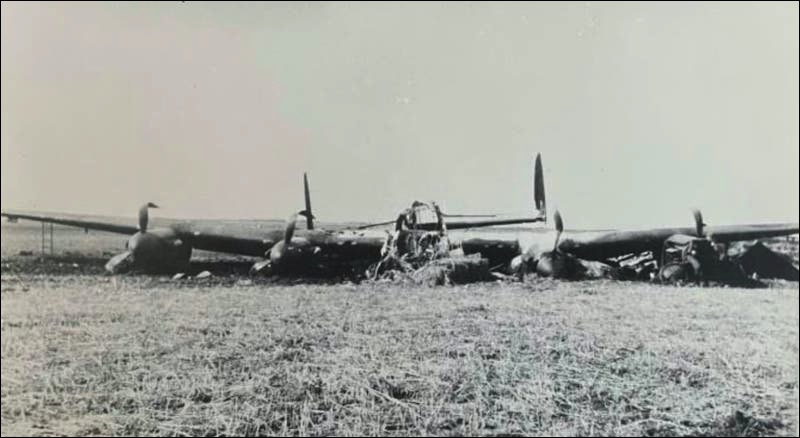
The Crash Site
The crew, which consisted of Pilot Sgt William V H Richards, Flight Engineer Sgt John W Hargreaves, Navigator Sgt Graham H Roberts RAAF, Bomb Aimer Sgt Charles V Thurley, W/Op-Air Gunner Sgt Albert C Stockley, W/Op-Air Gunner Sgt John B Vardy and Air Gunner Sgt William S Gregory were all unharmed. The rest of the night and the following day they hid and only in the evening did they start walking. During the evening of 24 September they arrived at Øster Høgsbjerg farm, near Idum, where they were well treated by Helga and Ulrik Jensen. They were given food and a place to sleep in the hay loft, and stayed until the next evening.
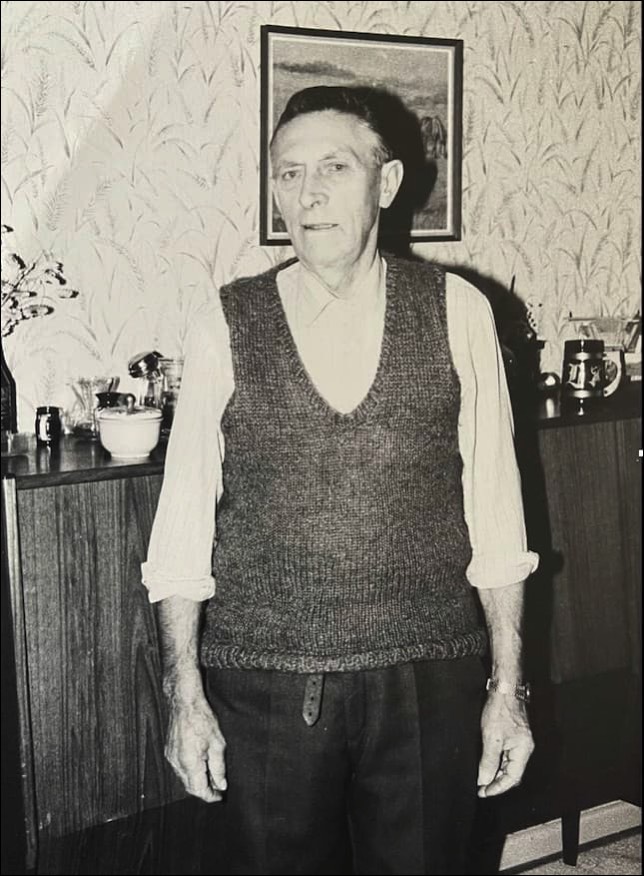
Ulrick Jensen - the friendly farmer.
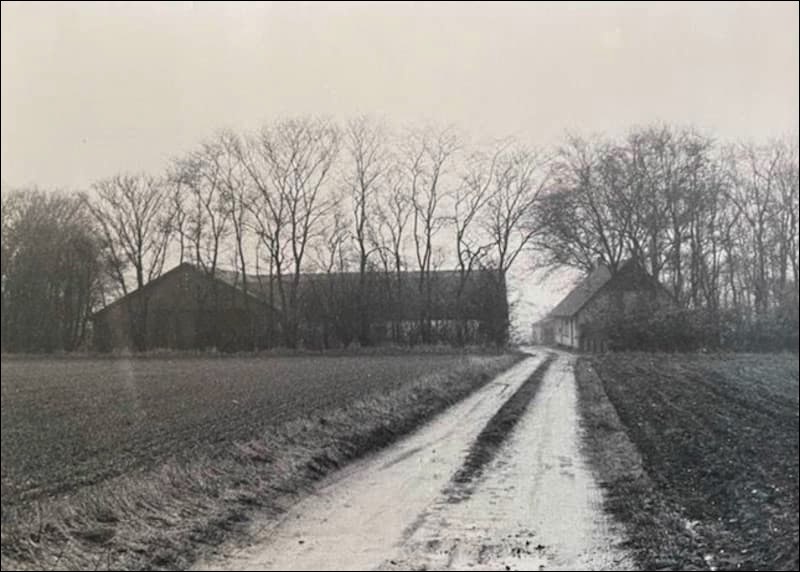
Oster Hogsbjerg - the Jensen farm.
On 26 September, around noon, the flyers were seen in a barn near Tvis by the owner. He called the Danish police who in turn informed the German Wehrmacht. The Germans then arrested the flyers, but since they had nowhere suitable to hold the Englishmen in the German barracks, they were brought to the police station in Holstebro. Here they were guarded by two German Unteroffiziers until late in the afternoon when they were moved on.
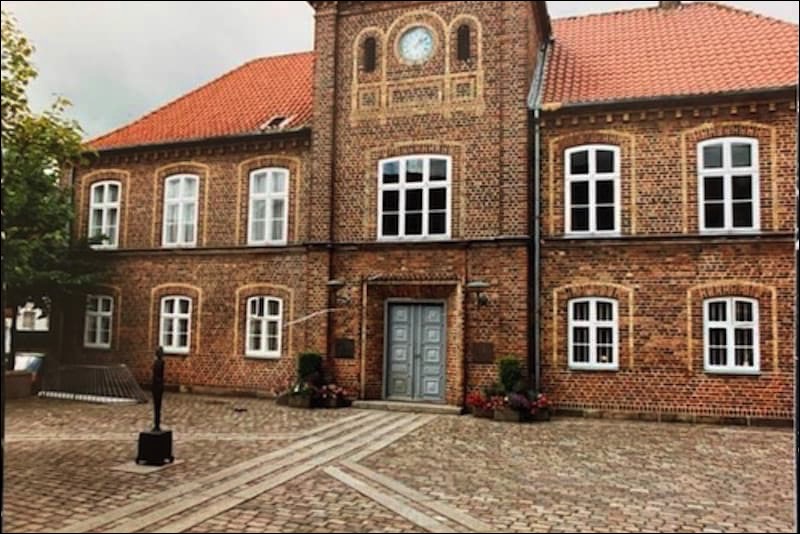
Hostelbro police station.
In the final stages of the war in Europe, John and his fellow POWs were obliged to join the central route of one of the infamous Death Marches across Germany. Their route took them from Lamsdorf to Stalag III-A at Luckenwalde, about 19 miles south of Berlin. The winter of 1944/45 was one of the coldest in 20th century Europe, with blizzards and temperatures plunging as low as -25C. The prisoners were ill-prepared for such an ordeal having suffered years of poor rations and wearing clothing ill-suited to the appalling weather conditions. Those with intact boots had the dilemma of whether or not to remove them at night. If they left them on, Trench Foot could result; if they removed them, they may not be able to get their swollen feet back in them in the morning. Frostbite was an ever-present danger, as was the prospect of the boots becoming frozen overnight or, worse still, stolen.
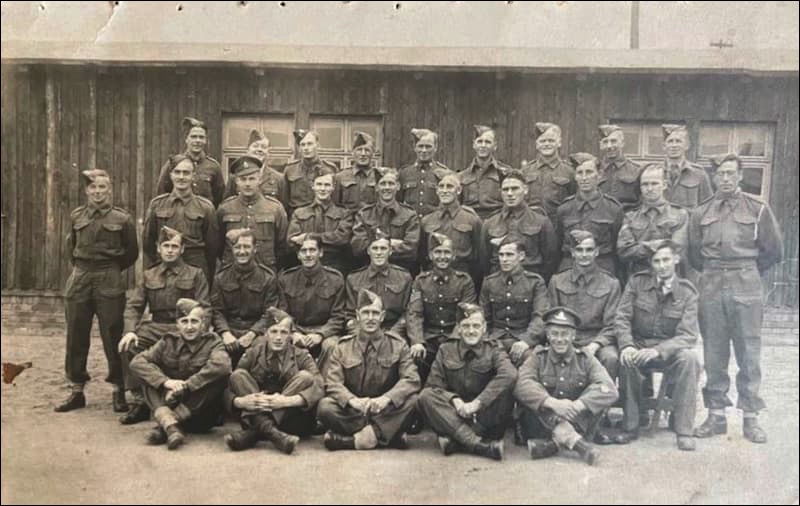
John Hargreaves with fellow POWs at Stalag VIIIB.
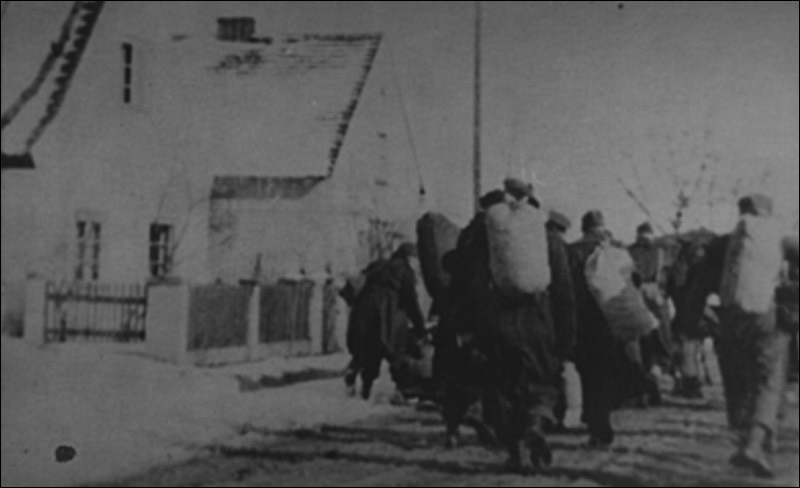
The start of ‘The March’, Ober-Silesia, January 1945.
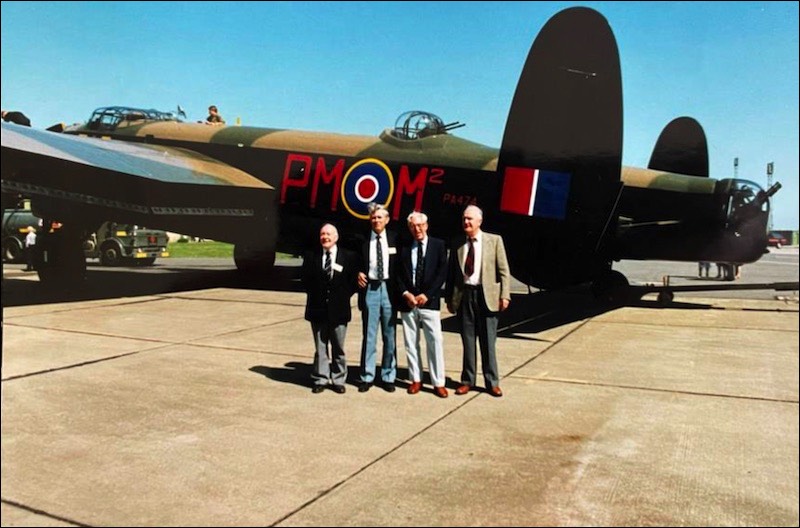
A crew reunion at RAF Coningsby. L - R : John Hargreaves, Bill Rickards, Graham Roberts and John Vardy.
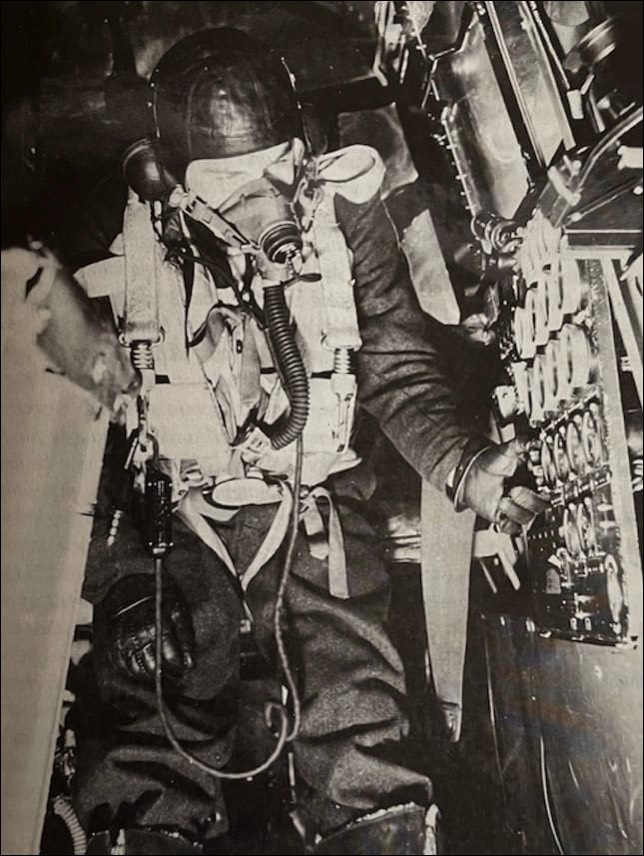
A Lancaster Flight Engineer at his crew station.