The Prince and the Vulcan
By Simon Baldwin
For those unfamiliar with gate guardians and/or Vulcan XM607, I will begin with a few words of explanation. Look away if you are one of the cognoscenti. Most RAF stations have an old aircraft positioned close to the main gate; an aircraft that illustrates the history and heritage of the station. In the early 1980s the Vulcan was phased out of RAF Service, and Vulcan XM 607 became RAF Waddington’s gate guardian. Vulcan 607 was put into retirement close to the main road through RAF Waddington, the High Dyke, and near to the entrance to the Station from the crossroads in Waddington Village. The No 44 (Rhodesia) Squadron memorial was erected just in front of the aircraft. The aircraft represents RAF Waddington’s heritage as a strategic bomber base during both the Second World War and the Cold War. The retirement of the Vulcan was also the end of the era of the strategic bomber for the UK. The RAF no longer has an aircraft that was designed to reach deep into the heartland of an enemy nation. For those of us old enough to remember, the Vulcan is also a reminder of a time when the British aircraft industry thrived, and made the best military aircraft in the world.
XM607 was a No 44 (Rhodesia) Squadron aircraft, which was apposite because the Squadron, based at RAF Waddington, was the first RAF squadron to be equipped with the Lancaster, and the last to fly the Vulcan in the bomber role. Vulcan 607 was also the only Vulcan from which bombs were dropped in anger. During the Falklands War, Martin Withers and his crew, using 607, put a large crater in the middle of the Stanley runway. The Vulcan raids during the Falklands War were code named Black Buck, and Martin Withers’ raid with a flight time of nearly 16 hours was the longest bombing attack in the history of air warfare.
As I have mentioned, Vulcan 607 spent its early retirement years with the Squadron memorial, but as the remorseless closure of RAF bases continued, and more units were moved into RAF Waddington, the land under 607 was needed for new buildings. Vulcan 607 was moved to a new home at the end of the runway next to the A17 road.
The aircraft has lived outside at the mercy of the elements for around 40 years. Most Station Commanders have tried to slow the deterioration caused by our less then kind UK weather, but there has never been sufficient cash to do much more than a little self-help by willing volunteers. We have helped where we could. For example, Mel James who was the Senior Engineering Officer at Ascension for the Black Buck raids has carried out two surveys of the aircraft, but of necessity each time, the surveys were limited to the aircraft exterior, and there remained a nagging concern that nasty things could be happening under the skin.
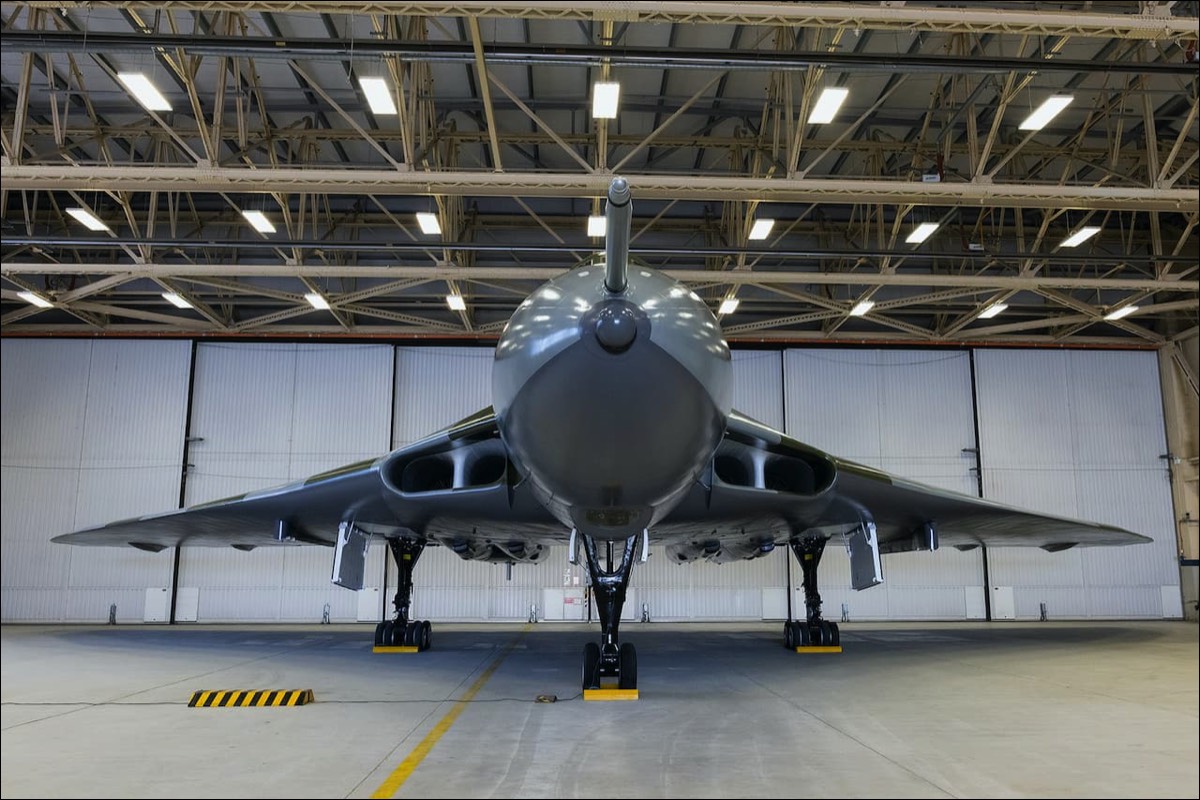
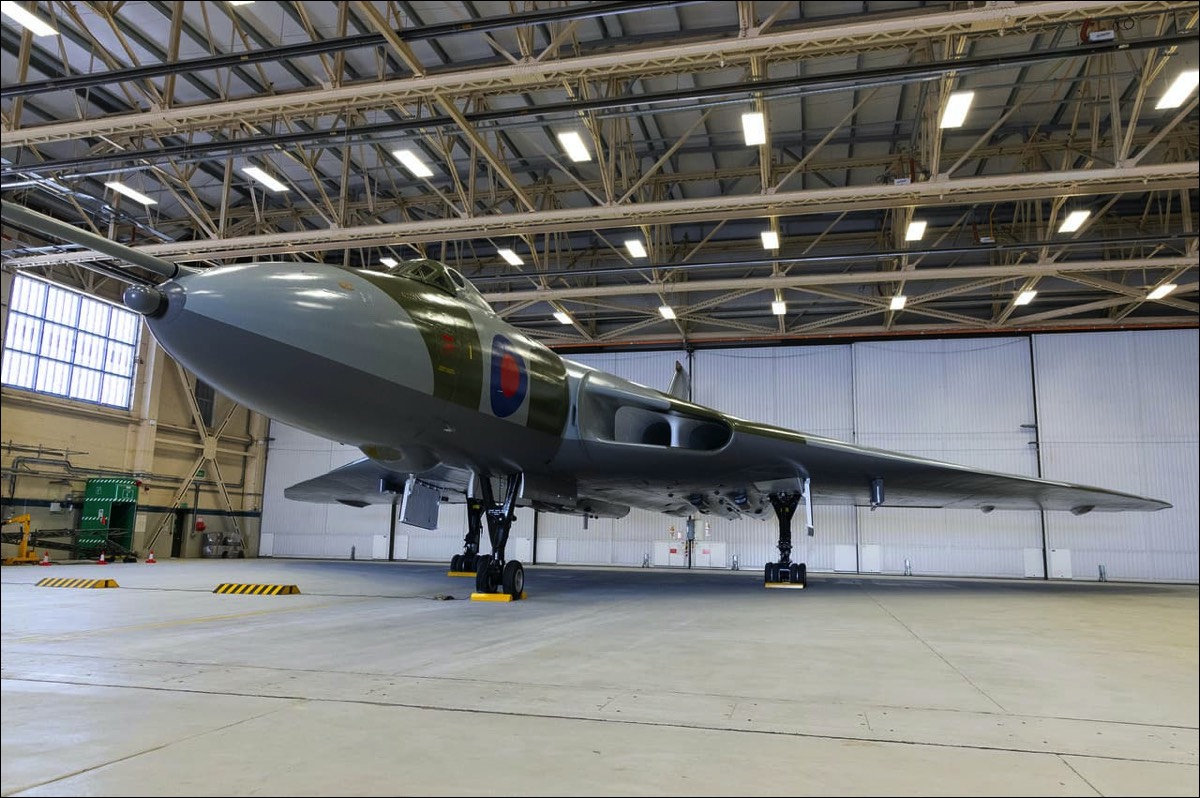
In the last few years two things have changed. First, the RAF has produced a policy for gate guardians, and as a result the Station Commanders have been able to secure some funding for work on Vulcan 607. Second, the Vulcan 607 project was taken on by the then Squadron Leader Suzi Wall. Suzi has since been promoted to wing commander and posted to MOD, but she continues to actively manage and drive forward the project, and she has turned what was an ongoing attempt to preserve the aircraft into a full on restoration project. The restoration is being carried out in two phases. The first was to repair, waterproof and repaint the outer surfaces, and this has now been completed, including an internal survey of the aircraft, which happily has shown that there are no significant internal problems. Those who visited Vulcan 607 during our reunion last year will remember that most of the paint had been stripped. The new paint job is now complete, and 607 is in her Black Buck camouflage. The aircraft looks superb, and probably better than when the aircraft was first painted in camouflage colours.
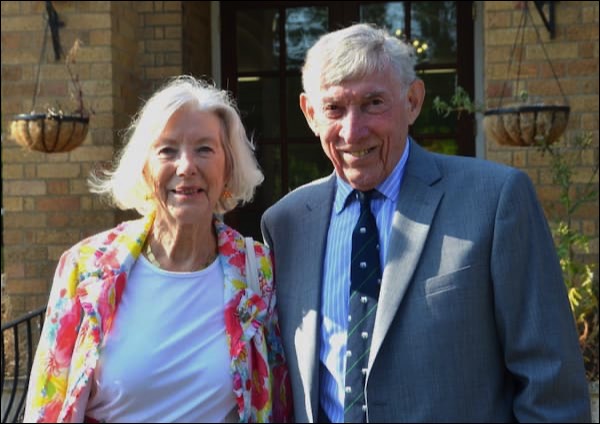
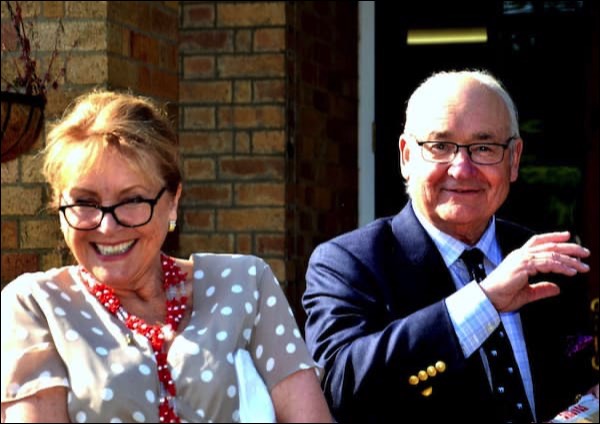
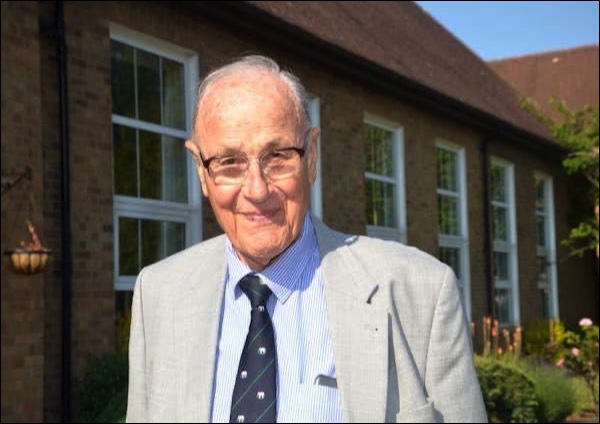
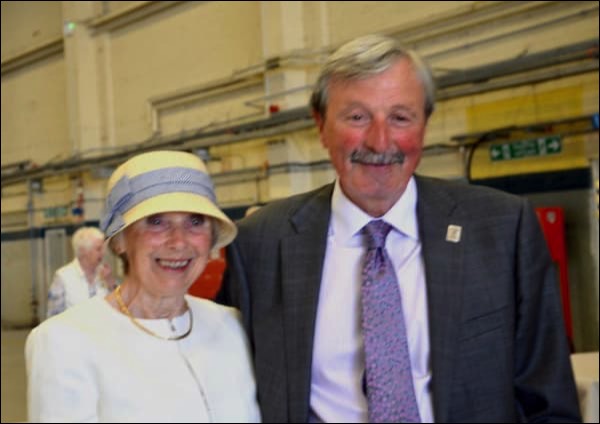
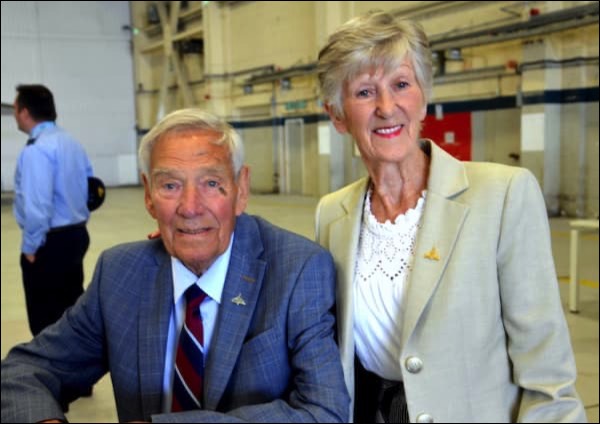
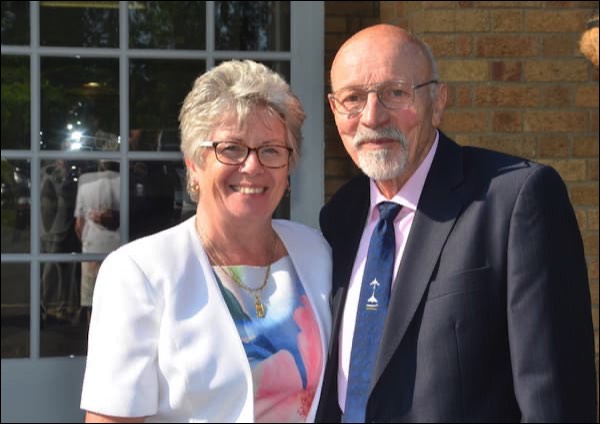
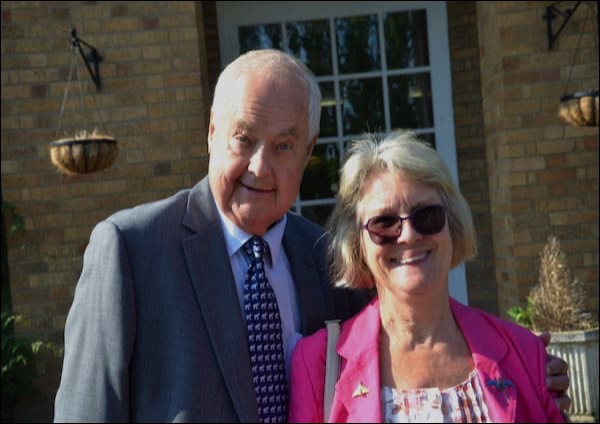
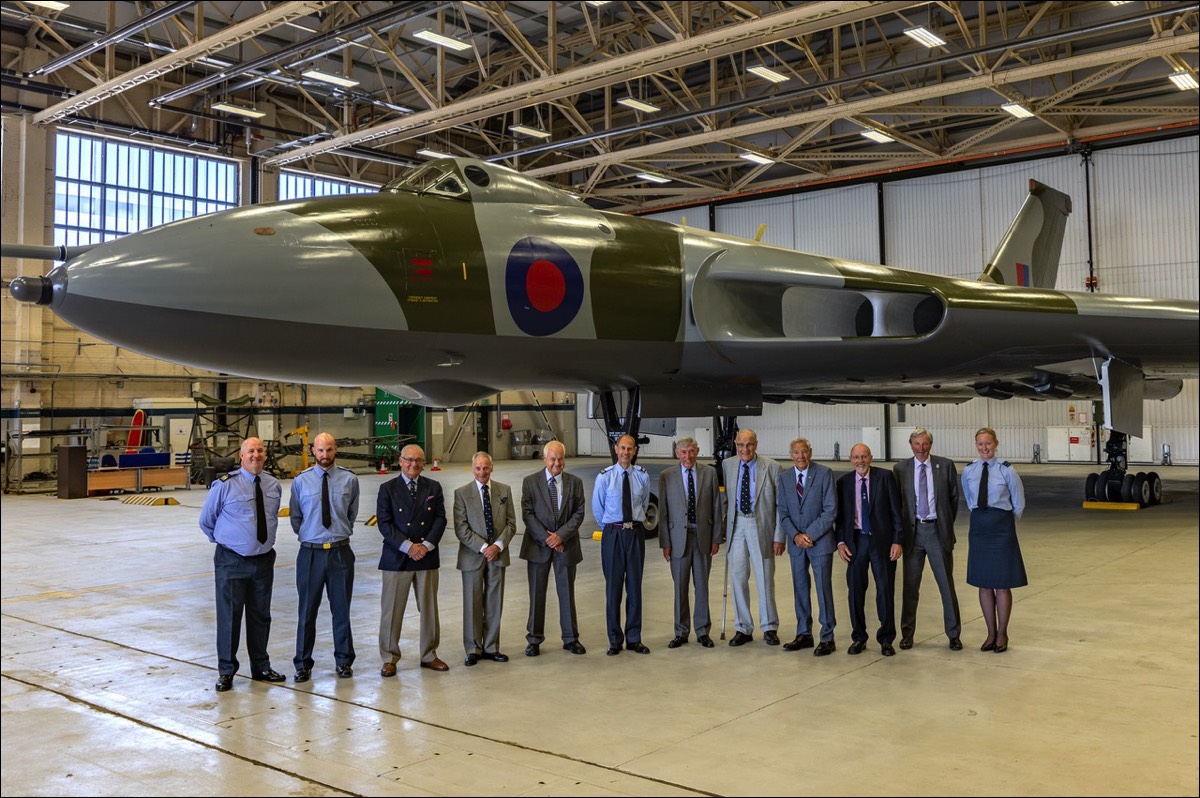
This is where the Prince enters the story. His Royal Highness the Duke of Edinburgh is RAF Waddington’s Honorary Air Commodore. He visited the Station on the 9th June 2023 to see the newer units on the Station, and in particular the restoration team and Vulcan 607. We were asked to provide 12 Black Buck veterans (their description not mine) and their ladies to be part of the visit. With a bit of cosmetic counting, helped by Suzi Wall, we managed to increase the number to 15, and thus included crew members from each of the Black Buck crews, and representatives from the planning and engineering support staff.
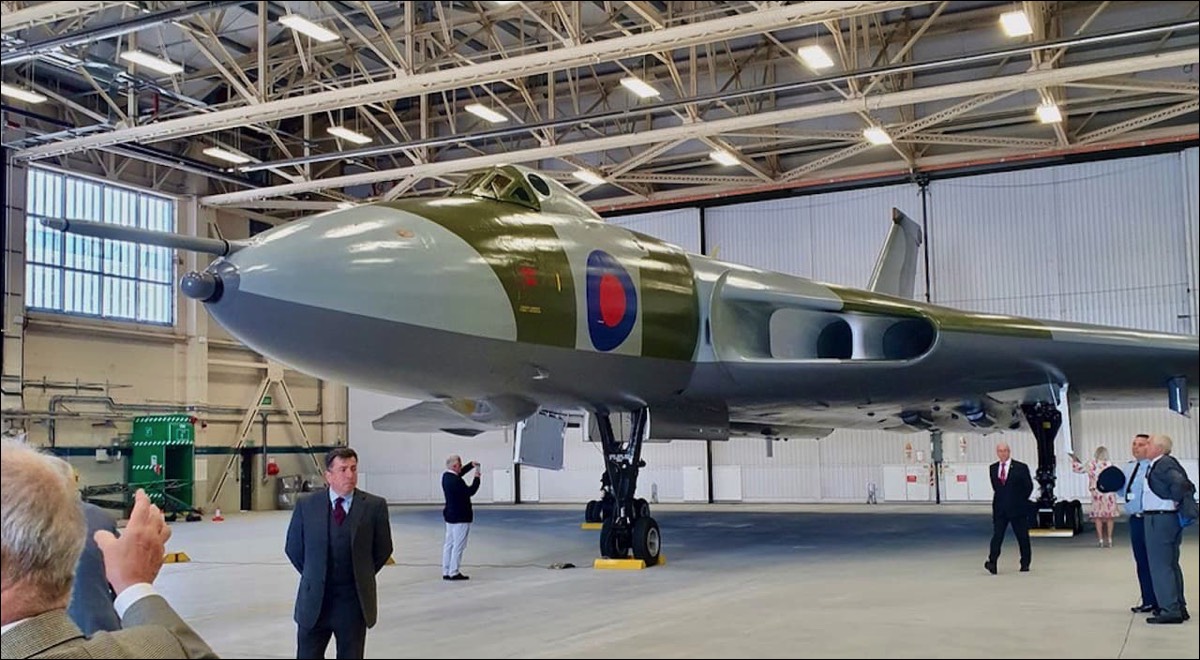
After a good lunch in the Officers Mess, we were taken by bus to a hangar which looked more pristine than it ever did in our time. The hangar housed Vulcan XM607 in solitary splendour. We had time to have a good look at the aircraft before His Royal Highness arrived. We were advised not to take photographs while he was with us. Presumably because it was a private visit, and not open to the media. The Duke of Edinburgh had been visiting other units on the Station , and the Station Commander told me that His Royal Highness had asked, “When are we going to see the Vulcan?” Warrant Officer Dave Parkin and Flight Sergeant Steve Lowe had almost alone kept the work going on Vulcan 607 before Suzi Wall came onto the scene, and I was delighted that the three of them were the ones to show The Duke of Edinburgh the work that had been carried out.
The Duke of Edinburgh then joined the ‘veterans’ next to 607 and we had an informal, and cheerful chat. He was clearly very interested in Vulcans and Black Buck. The Station Commander sent me a copy of the letter that the Duke of Edinburgh’s Assistant Private Secretary wrote after the visit which included, “His Royal Highness particularly enjoyed spending time with the veterans from 44 Squadron who were involved in Operation Black Buck back in 1982. Please give them our thanks for the signed book they also very kindly gifted to The Duke of Edinburgh.” I had asked His Royal Highness whether he had read “Vulcan 607” by Rowland White. He replied that he had not, and I gave him a copy, but I don’t remember signing it!
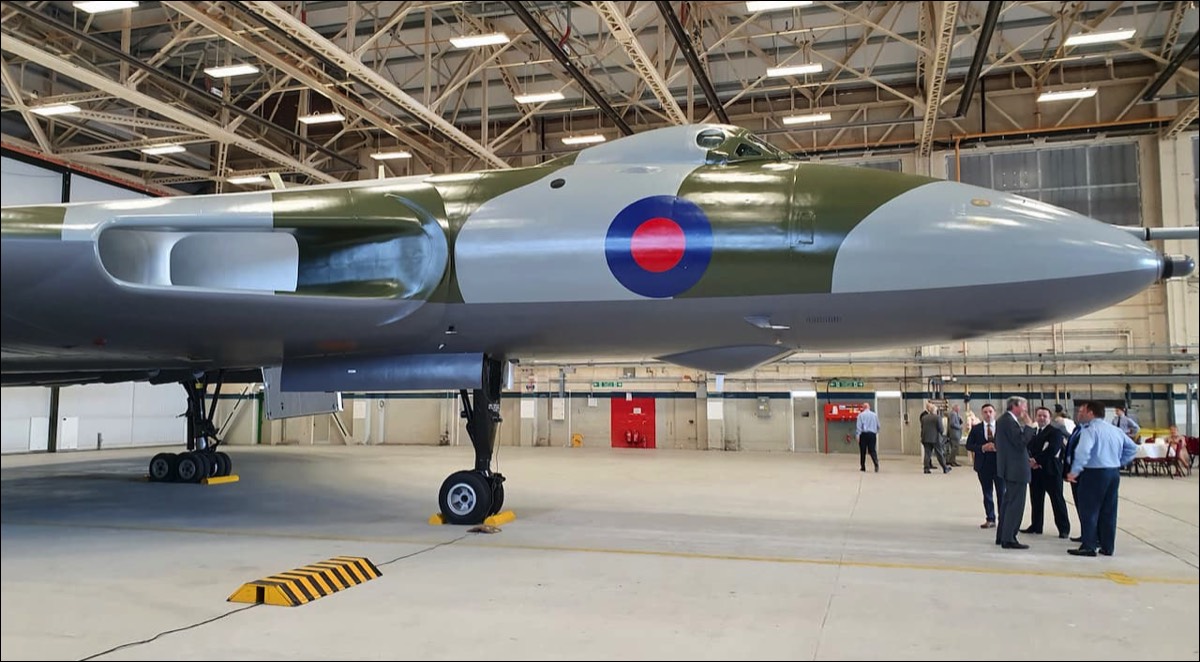
The Duke of Edinburgh also met some of the Vulcan fraternity - who look after the Vulcans that are scattered around the country - and who had contributed their expertise and sometimes equipment to the renovation. He also met a representative from the company that supplied the paint at a massively reduced price, and the two painters who worked almost non stop in the week before the visit to have the aircraft ready in time.
The second phase of the restoration will be to return the crew cabin to its previous smelly splendour. I last looked inside a few years ago and the cabin was covered in mould. Several of the instruments were given away to the then flying Vulcan XH558, which is housed at the former RAF Finningley. Suzi Wall and her team hope to recover some of these, and source the rest from where ever they can be found. If they cannot unearth the real thing, the replacements will be computer generated and printed. This technology is definitely in my grey area.
We plan to visit Vulcan 607 to see the restoration work during our next reunion in 2024. If phase 2 has progressed well, we might be able to view the inside of the cabin.
Black Buck Principles